
Get ahead
VMware offers training and certification to turbo-charge your progress.
Learn more Spring AI2.1.0
Spring AI is an application framework for AI engineering. Its goal is to apply Spring ecosystem design principles, such as portability and modular design, to the AI domain, and to promote using POJOs as the building blocks of an application.
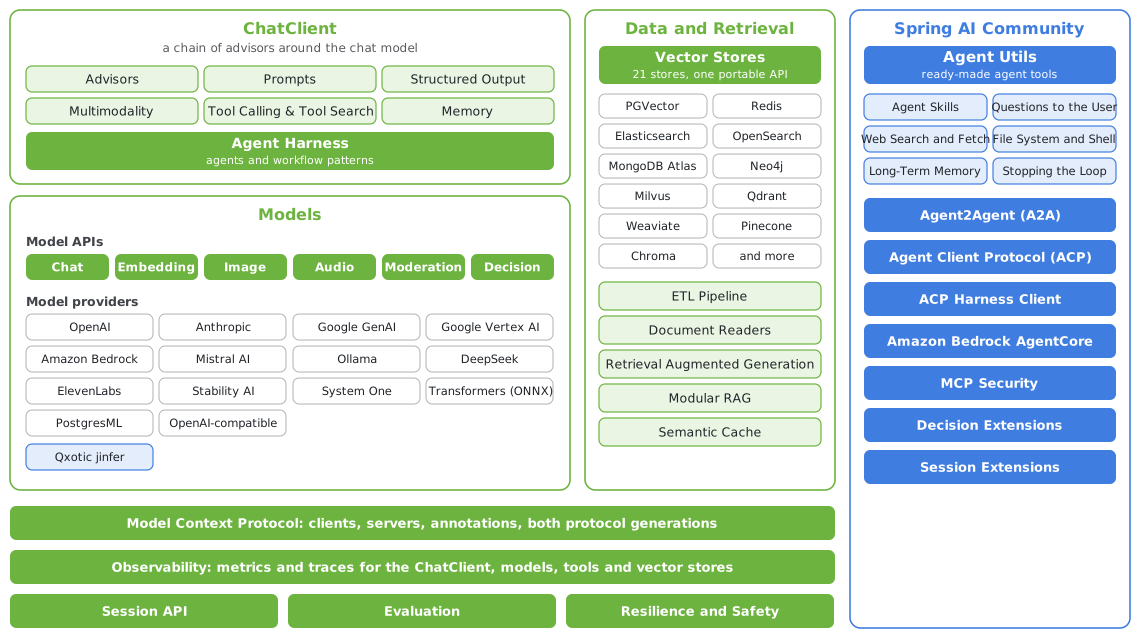
At its core, Spring AI addresses the fundamental challenge of AI integration: Connecting your enterprise Data and APIs with the AI Models.
Spring AI provides the following features:
ChatClient
ChatClient and its tools.Models
Data and Retrieval
Model Context Protocol
Across the Application
This feature set lets you implement common use cases such as "Q&A over your documentation" or "Chat with your documentation."
Extensive reference documentation, sample applications, and workshop/course material.
You can get started in a few simple steps:
Create a Spring Boot Web application with a Spring AI OpenAI boot starter dependency. This Spring Initializr link can help you bootstrap the application. (With start.spring.io you can select any AI Models or Vector Stores that you want to use in your new applications).
Add your OpenAI key to the application.properties:
spring.ai.openai.api-key=<YOUR OPENAI KEY>
Add the following snippet to your SpringAiDemoApplication class:
@Bean
public CommandLineRunner runner(ChatClient.Builder builder) {
    return args -> {
        ChatClient chatClient = builder.build();
        String response = chatClient.prompt("Tell me a joke").call().content();
        System.out.println(response);
    };
}
Run the application:
./mvnw spring-boot:run
Want to get started in another way? View the Getting Started section in the reference documentation.

VMware offers training and certification to turbo-charge your progress.
Learn moreTrueSource Spring Enterprise offers support and binaries for OpenJDK™, Spring, and Apache Tomcat® in one simple subscription.
Learn moreCheck out all the upcoming events in the Spring community.
View all