Pieter Humphrey

Pieter Humphrey

Alumni
Recent Blog posts by Pieter Humphrey

Webinar Replay: Getting Agile with Pivotal Tracker

News | September 30, 2013 | ...

Presenter: Davis W. Frank, Pivotal Labs

Slides: https://github.com/infews/2013.09.05.GettingAgileWithPivotalTracker

"Agile Software Development" is an ambiguous term. It's an umbrella term. It's a controversial term. But what does it really mean? The first principle of agile development is to keep feedback loops small to allow a team to make frequent, small corrections on the way to delivery. Pivotal Labs practices this every day. We coach our clients on how to re-view their problems and approach from first principles. We wrote Pivotal Tracker - the Agile project management app - to work the way we think. Come learn about tight feedback loops, how to use them in software, and how Pivotal Tracker can keep your backlog sane.

!{iframe width="420" height="315" src="//www.youtube.com/embed/kFQORVSDeF0" frameborder="0" allowfullscreen}{/iframe}
Webinar: Building WebSocket Browser Applications with Spring

News | September 24, 2013 | ...

So, you've written a "Hello world!" WebSocket application or perhaps even a chat sample. You're able to exchange messages even in pre-Servlet 3.1 containers and pre-IE 10 browsers (that don't yet support WebSocket) thanks to the SockJS protocol and Spring's support for it. However a message is a blank page that can have any content. Whatever message format you choose, proprietary or standard, both client and server need to understand it as well as distinguish different kinds of messages. You need support for the publish-subscribe pattern central to messaging applications so you can broadcast messages to one or more subscribers. You need to incorporate security, validation, and so on. In short you need to build a real-world application. If you're used to web applications (and Spring MVC annotated controllers) you are familiar with the foundation that HTTP provides including URLs (nouns), HTTP methods (verbs), headers, parameters, and others. Imagine building an application without HTTP, just a socket. WebSocket gives you this brand new, exciting capability -- full duplex, two-way communication -- yet you no longer have an application-level protocol. Can an entire application be built around a single Endpoint class processing all messages, assuming a single WebSocket connection between browser and server? Join Rossen Stoyanchev as he demonstrates that, thankfully, the WebSocket protocol has a built-in sub-protocol mechanism.

Europe

Tuesday, October 8 3:00PM GMT Summer Time London, GMT+01:00)

Register https://gopivotal.webex.com/gopivotal/onstage/g.php?t=a&d=667384670


North America

Tuesday, October 8 10:00AM PDT San Francisco, GMT-07:00)

Register https://gopivotal.webex.com/gopivotal/onstage/g.php?t=a&d=660130258

Webinar: Building Big Data Applications with Hadoop & Spring

News | September 24, 2013 | ...

At Pivotal we are bringing two open source projects together -- Hadoop and the very rapid and widely used Spring java application development framework to help build Big Data Applications. While Hadoop is proving to be the defacto foundation for storing and processing data, real-world scenarios require much more. Millions of developers are already using Spring to create high performing, easily testable, reusable code without any lock-in. In this month's webinar James Williams will explore how Spring XD (Xtreme Data) is addressing Big Data Application needs including:

  • High throughput distributed data ingestion into HDFS from a variety of input sources
  • Real-time analytics at ingestion time, e.g. gathering metrics and counting values
  • Hadoop workflow management via batch jobs
  • High throughput data export, e.g. from HDFS to a RDBMS or NoSQL database.

Date: Thursday, October 3, 2013 Time: 9:00 AM, PST/5:00 PM, GMT Summer Time

Register http://play.gopivotal.com/Global_Hadoop_Spring_Webinar_Register.html


This Week in Spring - Sept 24th 2013

News | September 24, 2013 | ...

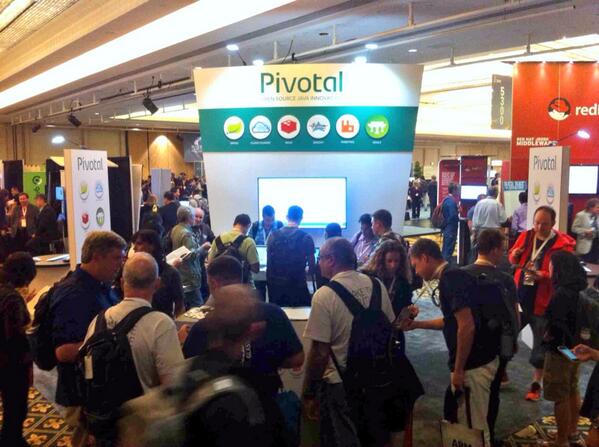
Hello everyone! Pieter posting this on Josh Long's behalf here... this week the Spring and Cloud Foundry teams are at JavaOne talking to developers about Spring, Cloud Foundry, Hadoop and big data! Happily, our pretty new @GoPivotal booth has garnered a lot of attention!

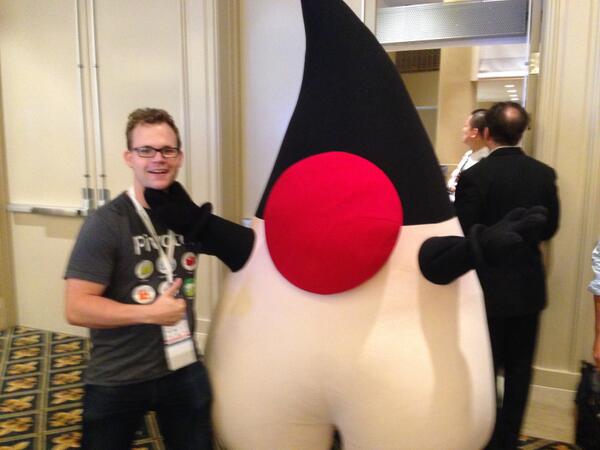
I met Duke, too! I think the big guy was as happy to see me as I was him!

  1. Spring ninja Greg Turnquist put together a nice post on how to contribute to Spring Boot with a pull request. The article does ultimately talk about the processing sending a pull request, but most of it's a really great introduction to extending Spring Boot to suit a new use case (like JMS, which simply hadn't been added yet). This post also introduces some cool features in Spring Boot, if you haven't learned about it yet.
  2. Speaking of Spring Boot, check out this upcoming Spring Boot webinar featuring project co-lead Phil Webb!
  3. Rossen Stoyanchev put together a knock-out piece how to build web applications that use websockets, or Sock.js, and how to then layer STOMP on top of that for an easier messaging-style interaction between the browser and the service.
  4. Rossen also has an upcoming webinar on Oct 8th, Building WebSocket Browser Applications with Spring, showing off the best of his SpringOne2GX 2013 session.
  5. I encourage you to check out the upcoming webinar featuring James Williams on building big data applications with Spring, Spring XD and Hadoop! This is going to be an awesome talk. James has some killer examples and knows his stuff.
  6. In related news, I put together a quick post on my thoughts on Data Integration, Stream Processing and Spring XD.
  7. Jakub Kubrynski has put together a nice post on how to use load-time weaving to inject dependencies into objects not managed by the Spring container using a couple of different approaches.
  8. Nitin Kumar put together a nice look at Spring Integration, a lightweight approach.
  9. Tomás Lin, who says that he loves testing Grails applications with Spock, put together a great post on how to test with Spring Boot with Spock.
  10. Sometimes, you need to do RMI, and when you do, Spring has you covered!
  11. The BitwiseOR blog has a great post on how to use Spring Boot to build REST services, using Groovy no less! Win! I'm not sure if I agree with the conclusion, but whatever it takes for people to be able to use this to simplify development, it's a win! And, with really great posts like this, hopefully it won't be long at all before everyone's bootstrapping their development, too!

Webinar: Simplifying Spring with Spring Boot

News | September 19, 2013 | ...

Are you fed up with searching stackoverflow for copy-paste configuration, do you want to write apps that can 'just run'? Perhaps you are just starting out with Spring and want a quick way to learn the basics without manually downloading and installing half the Internet?

In this webinar Phil Webb will demonstrate how Spring Boot can take you from zero to Spring with minimal fuss. We will look at how you can rapidly prototype Spring applications using Groovy, and how Spring Configuration in Java applications can be radically simpler. We will show how you can embed tomcat into your applications…

Webinar Replay: Spring with Cucumber for Automation (08/2013)

News | August 30, 2013 | ...

Learn how Spring and Cucumber integrate to make test automation easier. Cucumber is a framework for Behavior-Driven-Development (BDD), a refinement of TDD (Test-Driven-Development). Its intent is to enable developers to write high-level use cases in plain text that can be verified by non-technical stakeholders, and turn them into executable tests, written in a language called Gherkin. Using Spring, Cucumber, WebDriver2, Hemant Joshi will show you how to use Spring & Cucumber to do BDD with elegance and joy.

Spring Framework 3.2 and the SpringSource EBR

News | August 23, 2013 | ...

Beginning with version 3.2, Spring Framework JAR files such as spring-core, spring-context, and spring-webmvc no longer contain MANIFEST.MF files with OSGi metadata. Likewise, builds are not automatically promoted to the SpringSource EBR. To ensure that OSGi users are able to upgrade to Spring Framework 3.2, SpringSource will create and publish bundles for Spring Framework 3.2 GA to the EBR in a separate process shortly following the GA release. At least one 3.2 milestone or release candidate will also be published such that the community can validate the OSGi metadata prior to going GA. Note that any future releases in the Spring Framework 3.1.x line will continue to contain OSGi metadata and will be published immediately to the EBR as per usual. Interested users may want to place a watch on SPR-8903 to be notified of further updates, e.g. when Spring Framework 3.2 bundles are published to the EBR.

Webinar Replay: Spring with Cucumber for Automation

News | August 04, 2013 | ...
Speaker: Hemant Joshi

Learn how Spring and Cucumber integrate to make test automation easier. Cucumber is a framework for Behavior-Driven-Development (BDD), a refinement of TDD (Test-Driven-Development). Its intent is to enable developers to write high-level use cases in plain text that can be verified by non-technical stakeholders, and turn them into executable tests, written in a language called Gherkin. Using Spring, Cucumber, WebDriver2, Hemant Joshi will show you how to use Spring & Cucumber to do BDD with elegance and joy.


About the speaker

Hemant Joshi

Hemant currently works at Visa Europe on automation framework technical arhcitect. Spring, Cucumber, Java for Visa worldwide.


Webinar Replay: Functional Programming without Lambdas

News | August 01, 2013 | ...

Speakers: Mattias Severson & Johan Haleby, Jayway Inc You've probably heard the buzz about functional programming and you may have glanced at the new Lambda features in Java 8. What is less known is that it's actually possible to leverage some of the functional-style techniques even in older Java versions. This means that you can program in a functional style, even if your organization has not updated to Java 8. In this session, you'll learn about real-world experiences with functional frameworks such as LamdaJ, Functional Java and Guava. What should you consider before adopting them? How do they compare against one another? If you are stuck with a legacy Java version and want to be prepared for the functional future of Java 8, make sure to attend this session.


About the speakers

Mattias Severson

Mattias Severson, Jayway, Inc

With a background in the hardware and embedded area, Mattias has shifted his focus to Java and the enterprise domain. He is a clean code proponent who appreciates Test Driven Development and Agile methodologies. Mattias has experience from many different environments, including everything between big server solutions for multinational companies down to flashing LEDs by using small micro controllers. He is curious, open-minded and believes in continuous improvement on all levels.

Johan Haleby, Jayway, Inc

Johan Haleby is a Swedish developer, speaker, and writer with a profound interest in software engineering and testability in particular. He has founded and contributed to numerous open source projects such as PowerMock, REST Assured and Awaitility and has spoken at several conferences and user groups such as Öredev and Devoxx.

      </div>
    </div>
    <div></div>
    <div>        </div>
    <div>
      <br />
    </div>
  </div>
</div>

Webinar: Resistance Is NOT Futile: How to talk Spring and Influence People

News | July 08, 2013 | ...

Sure the new features coming out in Spring Framework 4.0 are super exciting, but what about those of us that are still explaining dependency injection to our junior developers? And while Spock, Geb, and spring-test-mvc are revolutionizing our ability to test applications, what about the senior developers that are still justifying the value of unit testing to their managers. Strong technical leadership can overcome the organizational inertia that often resists your team's adoption of Spring technologies. Improve your leadership skills by drawing from lessons that were learned during the process of migrating Liberty University's software development department from "cut-and-paste coding" in ColdFusion to enterprise grade application development on the Spring Framework. Learn to plan an effective technology adoption strategy that avoids "new technology overload" and balances the pace of technology improvement with the necessity to continue production. Relationships with managers, junior developers, and production system administrators will all be important. Gain a better xtunderstanding of nontechnical managers and explore strategies for providing the conte they need to make the right decisions. Examine ways to build mentoring plans for your junior developers that include but extend beyond training and certifications from SpringSource University so that you can spend less time teaching and more time coding.

About the speaker

Tony Erksine, Liberty University

Designed and developed Java web applications using Spring, Hibernate, and Oracle. Coached teams of developers during every stage of the SDLC. Supervised the vetting, hiring, and training of new software developers. Helped transition the organization to agile software development using Scrum. Pioneered the adoption of new technologies and methodologies at Liberty (i.e. Spring, TDD) Participated in various interdepartmental efforts for architecture, crisis resolution, etc. More About Tony